

In today's competitive market, a steady stream of buyer and seller leads is the lifeblood of any real estate business. But before you even consider spending a dollar on advertising, we need to address your digital storefront. I've seen too many agents get excited about a new ad campaign, only to send high-quality traffic to a digital dead end.
Securing a consistent pipeline starts with a simple truth: you have to build the house before you invite people over. For realtors, this means creating a professional, mobile-friendly website and getting laser-focused on your ideal client. This article will guide you through the exact steps to build that foundation and then scale it with targeted digital advertising to master how to get real estate leads.
Building Your Digital Foundation for Lead Generation

Think of your website as your 24/7 digital office. When a potential client clicks your ad, their experience on your site in those first few seconds will either pull them in or push them away for good. A slow, clunky, or confusing website is the fastest way to burn through your ad budget with nothing to show for it.
Your site has to be more than just a digital business card; it's a lead-capture machine. It needs to be fast, look great on a phone, and have clear calls-to-action that guide prospects exactly where you want them to go. Before launching any paid campaigns, there are a few non-negotiable pieces you must have in place. This checklist covers the core components that turn ad clicks into actual conversations and, eventually, commissions.
Your Core Lead Generation Foundation
| Component | Core Objective | Why It's Essential for Conversions |
|---|---|---|
| Professional, Mobile-First Website | Establish credibility and provide a seamless user experience on any device. | Over 50% of web traffic is mobile. A poor mobile site kills trust and sends potential leads bouncing. |
| Ideal Client Profile (Avatar) | Attract high-quality, relevant leads by knowing exactly who you serve. | Generic marketing gets you tire-kickers. Specificity ensures your message resonates and converts the right people. |
| High-Converting Landing Pages | Capture lead information for a specific offer with a single, focused goal. | Sending ad traffic to your homepage is a distraction. A dedicated landing page can 2x-3x your conversion rates. |
| Valuable Lead Magnet | Offer something of genuine value in exchange for a prospect's contact info. | "Contact me for more info" isn't an offer. A market report or buyer's guide provides an incentive to connect. |
Getting this foundation right isn't just a suggestion; it’s the entire system that makes every dollar you spend on advertising work as hard as possible.
Get Crystal Clear on Your Ideal Client
This is the first strategic move, and it's the one most agents skip. You must get specific about who you want to attract. Are you chasing first-time homebuyers in a new suburb, or are you the go-to agent for luxury condos downtown?
Defining this "client avatar" sharpens every single part of your marketing:
- Your Ad Copy: The language that connects with a 28-year-old buying their first home is completely different from what grabs a 65-year-old looking to downsize.
- Your Ad Targeting: On platforms like Meta, you can target people based on life events like getting engaged or starting a new job—moments that perfectly align with your ideal client's journey.
- Your Offers: A "First-Time Homebuyer's Guide to Austin" will land much better than a generic offer. A "Luxury Downtown Market Report" does the same for a different audience. Tailor your bait to the fish you want to catch.
This step ensures that when people land on your site from an ad, they feel like you're talking directly to them. That's how you attract qualified leads.
Craft Landing Pages That Actually Convert
While your main website is your digital hub, dedicated landing pages are your secret weapon. A landing page is a single, standalone page built for one purpose and one purpose only: to get a visitor to take a specific action.
For example, instead of sending your "Free Home Valuation" ad traffic to your homepage—where they can get lost clicking around—you send them to a landing page. This page has no distracting navigation, no "About Me" section, just powerful copy about the valuation, a simple form to fill out, and a clear benefit. A local realtor in Boca Raton might create a landing page specifically for "Boca Raton Waterfront Property Valuations" to capture a high-intent audience.
This focused approach is a game-changer for conversion rates. Today, you can even add real-time chatbots to engage visitors and capture lead info instantly. These specialized pages are a cornerstone of modern online strategy, a fact you can see detailed in this guide to top lead generation strategies on manifest.ly.
By treating your website and landing pages as your digital headquarters, you create a system where every dollar spent on advertising has the highest possible chance of delivering a return. This foundation is non-negotiable for sustainable growth.
How to Get Real Estate Leads With Paid Ads
Once you've laid a solid digital foundation, it's time to fire up the engine that will consistently fill your pipeline with new opportunities. This is where paid advertising on platforms like Meta (Facebook & Instagram) and Google becomes your most powerful tool. This isn't about casting a wide net and hoping for the best; it's about precision-guided marketing.
This strategy is designed to capture the attention of everyone from the passive window-shopper scrolling on their couch to the highly motivated buyer or seller actively searching for help.
Think of these two platforms as serving distinct but equally vital roles. Meta is brilliant for creating demand—pulling people in with compelling visuals and lifestyle-focused content. On the flip side, Google Ads is the ultimate tool for capturing prospects who are already raising their hands, typing their exact needs into a search bar.
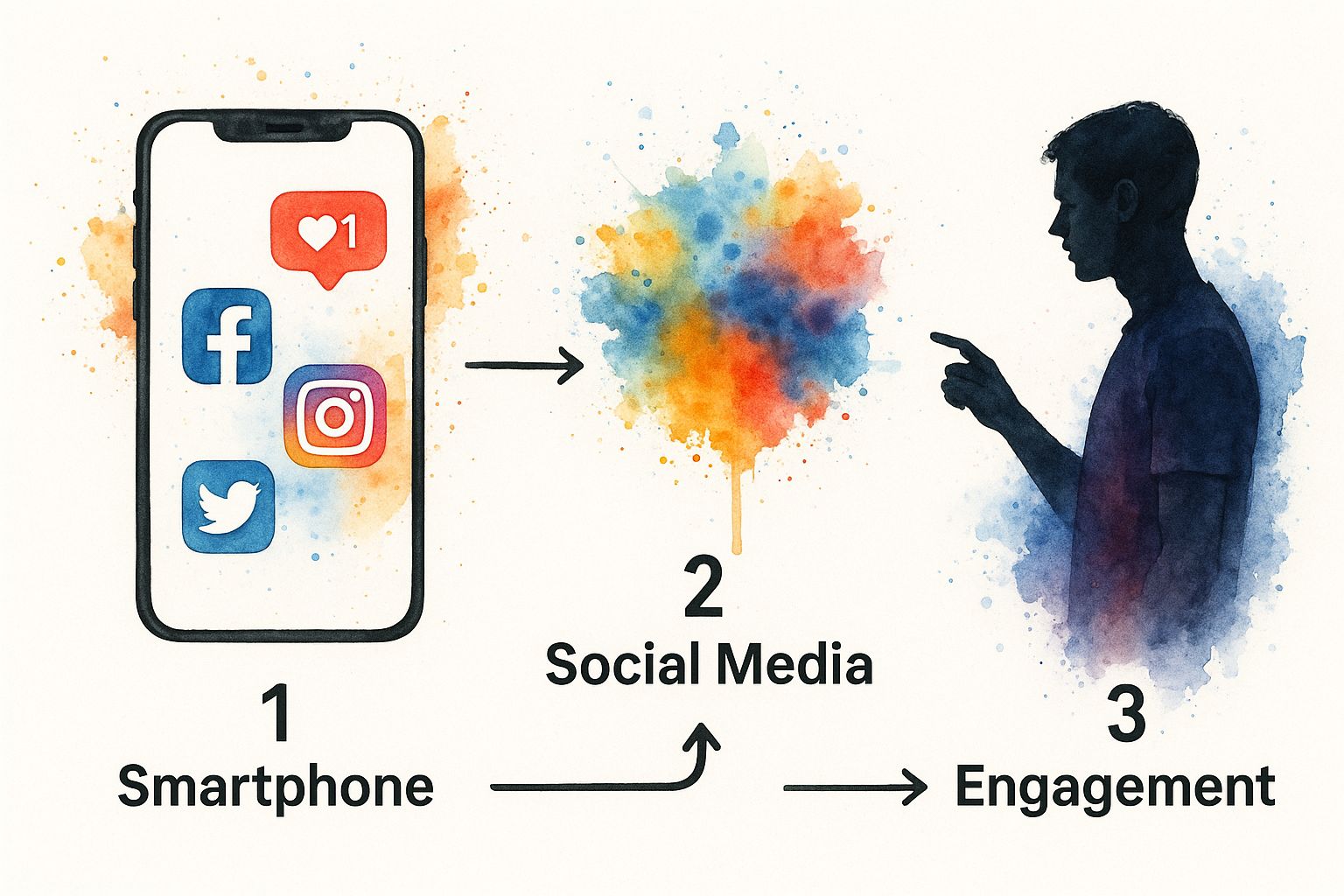
This visual is a great reminder that top-tier lead generation isn’t about a single ad. It's a continuous cycle of attracting, engaging, and ultimately capturing the attention of your ideal clients online.
Winning on Meta With Lifestyle and Video
When you're advertising on Facebook or Instagram, you are interrupting someone's social time. Your ad can't just be an ad; it has to be interesting enough to make them stop scrolling. This is your chance to build a connection with potential clients long before they even think they need an agent.
Video is your best friend here. A well-produced video tour of a new listing can generate a huge amount of buzz. But don't just focus on the house itself. Show off the lifestyle. What’s the neighborhood coffee shop like? Is there a great park down the street? You're not just selling a property; you're selling a dream.
Meta's targeting tools are a goldmine for real estate agents. You can build audiences around specific life events that trigger a move:
- Newly Engaged or Newlywed Couples: These individuals are prime candidates for their first home together.
- Users with a "New Job" Life Event: They might be relocating and desperately need a local expert.
- Parents with Young Children: They're almost certainly thinking about school districts and family-friendly communities.
Pro Tip: Don't limit yourself to running ads for specific listings. Create campaigns built around a valuable, free offer, like a "Neighborhood Relocation Guide" or a "Free Home Equity Report." This lets you capture leads much earlier in their journey—people who might not be ready to buy for another 6-12 months but will be eventually.
Capturing Active Searchers With Google Ads
While Meta helps you find potential clients, Google Ads helps potential clients find you. When someone types "realtor in Boca Raton" or "homes for sale near me" into Google, they have an immediate need. Getting your name to the top of those search results is critical for snagging these high-intent leads.
Your strategy here must be hyper-local. Concentrate on keywords that include your city, county, and even specific, desirable neighborhoods. This is how you stake your claim on your local market instead of competing with national portals on broad, expensive terms.
Here are a few examples of high-intent keywords you should be targeting:
best real estate agent in [Your City]homes for sale in [Your Neighborhood]how much is my home worth in [Your Zip Code]luxury condo realtor [Your Downtown Area]
A great Google Ads campaign isn't a "set it and forget it" activity. You need to be constantly checking in and making adjustments. Test different ad headlines, descriptions, and calls-to-action to see what resonates with your audience. For example, test "View Local Listings Now" against "Get a Free Home Valuation" to see which one brings in more qualified clicks.
Budgeting and Testing for Maximum ROI
The big question is always, "How much should I spend?" There isn't a magic number, but the smartest approach is to start with a modest, consistent daily budget rather than blowing a huge amount at once. This gives you time to gather data and learn what's actually working.
A starting budget of just $20–$30 per day is often enough to get the ball rolling and provide the data you need to start making smart optimizations.
A/B testing is completely non-negotiable. This simply means you run two slightly different versions of an ad to see which one performs better.
- Test Your Creative: Does a polished video tour outperform a carousel of professional photos?
- Test Your Copy: Does asking a question in your headline get more clicks than making a statement?
- Test Your Audience: Do newly engaged couples convert at a higher rate than people who have shown interest in Zillow?
By constantly testing and refining your approach, you systematically lower your cost per lead and drive up your return on ad spend (ROAS).
Turning New Leads Into Future Clients
Getting a click on your ad is just the opening handshake. The actual commission check comes from what you do after that click. Too many agents burn through their marketing budget because they treat a new lead as the finish line when it's really just the start.
Without a solid follow-up plan, a lead is just a name on a spreadsheet. This is where a strategic nurturing system separates the top producers from everyone else. The goal is to become the trusted expert they automatically think of when they're finally ready to make a move.
The Power of Immediate and Automated Follow-Up
In the world of online leads, speed is your single biggest competitive advantage. When someone fills out a form on a Meta or Google ad, the clock starts ticking—fast. A prompt, professional response shows you’re on top of your game and dramatically increases your chances of having a conversation.
This is where a good Customer Relationship Management (CRM) system becomes your most valuable player. It handles that critical first touchpoint automatically, ensuring no lead slips through the cracks.
- Automated Welcome Email/Text: The second a lead submits their info, your CRM should fire off a welcome message. This confirms you got their request and sets expectations.
- Internal Notifications: At the same time, the CRM should alert you and your team with the lead's details so you can prepare for a human follow-up call.
This initial, automated contact is your first step in turning a cold click into a warm conversation.
Crafting Drip Campaigns That Build Trust
A hard truth: only about 3–6% of your contacts are ready to buy or sell right now. This statistic proves that a long-term nurturing strategy isn't just a "nice-to-have"—it's essential for converting the other 94% of your database.
This is where email drip campaigns shine. These are pre-written sequences of emails that go out automatically over days, weeks, or months to provide value and keep you top-of-mind.
A great drip campaign doesn't just sell; it serves. Your goal is to become a welcome guest in their inbox, not a persistent pest.
You must segment your campaigns based on the lead's initial action. A lead who downloaded your "First-Time Homebuyer's Guide" needs a completely different message than someone who requested a "Luxury Home Market Report."
Here’s a real-world example for a "Home Valuation" lead:
- Email 1 (Instantly): "Your Preliminary Home Value Estimate is Here" – Deliver what they asked for immediately. In the email, offer to create a more detailed, custom analysis.
- Email 2 (Day 3): "3 Quick Fixes to Boost Your Home's Value" – Send a genuinely useful tip. This positions you as an expert.
- Email 3 (Day 7): "Here's What's Selling in Your Neighborhood" – Share a snapshot of recent sales in their area to show you're on top of the local market.
- Ongoing (Monthly): After the initial sequence, roll them into your general monthly market newsletter to maintain the long-term connection.
Scripts for That First Crucial Conversation
Automation is for efficiency, but personal connection closes deals. When you pick up the phone or send that first personalized text, your goal should be to offer help, not to push for an appointment.
Try this simple script for your first call:
"Hi [Lead's Name], this is [Your Name] with [Your Brokerage]. I saw you requested a home valuation on my website a little while ago, and I just wanted to personally follow up. I'm putting together a more detailed report for you now. Were you just curious about your home's value, or are you thinking about a potential move in the next 6-12 months?"
This low-pressure approach references their action and opens the door for a real conversation. By combining smart automation with genuine, human follow-up, you create a powerful conversion system. It's the key to mastering how to get real estate leads that actually turn into clients.
Building Authority With Content and Social Proof

Paid ads are fantastic for generating leads right now, but the long-term win is building a brand that pulls clients in on its own. It's about creating a sustainable business that doesn't rely solely on your ad budget.
In a crowded market, trust is your most valuable currency. That’s where smart content and solid social proof come in. When people see you consistently sharing valuable information and showcasing your wins, they stop seeing you as just another agent. They see you as the go-to expert. This "magnetic" effect makes your paid ads work even better, because prospects may already know and trust your name.
Deliver Genuine Value With Strategic Content
Content marketing for real estate is more than just posting your latest listings. You need to get inside the heads of your ideal clients. What are their biggest questions and fears about buying or selling in your city? Your job is to create content that answers those questions before they even ask you directly.
This approach builds incredible trust upfront. When you give away your expertise freely, you’re not chasing leads—you're attracting them. For more ideas on creating content that connects, check out the resources on the https://digitaladvertisingdirect.com/blog/.
The goal of your content should be to provide so much value that people feel like they owe you a conversation. It completely changes the dynamic from a cold pitch to a warm introduction.
High-Impact Content Ideas for Realtors
So, where do you start? Here’s a quick-start guide to content that moves the needle in a local market. We’re talking about creating hyper-specific resources that establish you as the undeniable local authority.
| Content Format | Ideal for Reaching | Primary Channel | Main Objective |
|---|---|---|---|
| Neighborhood Video Tours | Buyers looking for lifestyle and community feel. | Instagram Reels, TikTok, YouTube Shorts | Build an emotional connection and brand awareness. |
| Hyper-Local Blog Posts | Homebuyers and sellers in the research phase. | Your Website Blog, Google Search | Capture organic search traffic and establish expertise. |
| Client Testimonial Videos | Prospects who are close to making a decision. | Website, Social Media, Email Campaigns | Provide social proof and build final-stage trust. |
| Live Q&A Sessions | Anyone with real estate questions in your market. | Facebook Live, Instagram Live | Demonstrate real-time knowledge and build community. |
By focusing on these formats, you’ll build a library of assets that works for you 24/7, drawing in qualified leads while you focus on closing deals.
Harness the Power of Social Proof
Answering questions builds authority, but proving you get results cements it. This is where social proof becomes your superpower. Nothing convinces a nervous buyer or seller faster than seeing that other people—just like them—trusted you and had an amazing outcome.
You must make gathering social proof a non-negotiable part of your workflow.
- Make Testimonials Effortless: After every closing, have a system. Send a simple email with a direct link to your Google Business Profile or Zillow page.
- Tell a "Just Sold" Story: Don’t just post a photo of the house with a "SOLD" sign. Give it context! "We helped this incredible family sell their home in just 7 days for 10% over asking!" That’s a story that demonstrates your value.
- Embrace Video: A heartfelt 30-second video from a happy client on their phone is pure gold. It’s authentic and far more powerful than pages of written text.
Sprinkle this social proof everywhere—your website’s homepage, your landing pages, and all over your social media. Consistent reinforcement is how you build an undeniable reputation.
Measuring What Matters for Your Ad Spend
Throwing money at ads is easy. Investing it for a predictable, profitable return is what separates top producers from everyone else. This is where we stop guessing and start building a data-driven machine that turns your marketing from an expense into a reliable source of business.
When you know what’s working, what’s a waste of money, and where to double down, you can scale your efforts with confidence.
Setting a Realistic Marketing Budget
One of the first questions agents ask is, "How much should I actually spend on ads?" The answer is surprising. You don't need a massive war chest to see results.
In fact, nearly half of all agents—46% to be exact—invest between $0 and $250 per month on lead generation. You can dig into these spending trends to see how you compare. The takeaway is clear: consistent, smart spending almost always beats a big, unfocused budget.
Start small, prove your ads work, and then scale up.
Expert Advice: Set a daily budget you won’t lose sleep over. Even $20–$25 a day is plenty to start gathering the data you need. Consistency is far better than blowing your entire budget on a single weekend campaign.
This approach lets you test the waters, get a baseline for your costs, and make smart decisions without taking a huge financial risk.
Moving Beyond Cost Per Lead
The first metric every new advertiser gets obsessed with is Cost Per Lead (CPL). While it’s good to know, it barely scratches the surface. A low CPL means nothing if those leads never answer the phone.
To truly understand your campaign's performance, you have to track what happens after the lead comes in. These are the metrics that truly matter:
- Lead-to-Appointment Rate: Out of all new leads, what percentage agrees to a meeting? This number tells you if you're attracting motivated people.
- Appointment-to-Client Rate: Of all the appointments you set, how many sign on the dotted line? This KPI shines a light on the effectiveness of your sales conversations.
- Cost Per Appointment (CPA): This is a much better metric than CPL. Just divide your total ad spend by the number of appointments you booked. This gives you a real number for what it costs to get a serious prospect in front of you.
When you track these KPIs, you get a clear look at your entire lead-to-close system and can pinpoint weak spots. This data shows you exactly where to focus your energy.
Calculating Your True Return on Ad Spend
At the end of the day, only one metric pays the bills: Return on Ad Spend (ROAS). This simple calculation shows you exactly how much gross commission income (GCI) you’re earning for every dollar you put into advertising.
The formula is simple:
ROAS = (Total GCI from Ads / Total Ad Spend)
For example, if you spent $1,000 on Google Ads this quarter and closed one deal from it that brought in $10,000 in GCI, your ROAS is 10x. That’s not an expense; that’s a profit center.
Armed with this data, you can confidently pour more money into the campaigns, ads, and keywords that deliver the best returns. It removes the emotion from budgeting and gives you a clear path for mastering how to get real estate leads profitably.
Ready to stop guessing and start building a predictable pipeline of high-quality leads? The team at Digital Advertising Direct specializes in creating and managing targeted ad campaigns that deliver results, paired with powerful CRM automation to ensure no lead is ever left behind.
Get a free, no-obligation strategy session with our real estate marketing experts today.