

If you want to truly understand how to get leads online, you need to stop thinking about chasing customers and start thinking about attracting them. It's no longer about interrupting people; it's about providing so much genuine value that your ideal clients find you. This guide is your no-nonsense roadmap to making that a reality.
Why Your Business Needs a Modern Lead Strategy

Does your current lead generation feel like pushing a boulder uphill? You're not alone. Relying on old-school tactics like cold calling is less effective every day. The data speaks for itself: 97% of people now ignore cold calls. That's a massive signal that interruptive marketing is on its last legs. This isn't a problem a minor tweak can fix; it demands a complete rethink of how you find and connect with potential customers.
For example, a local realtor in Boca Raton might have built their business on flyers and bench ads for years. Suddenly, a competitor starts cleaning up by running targeted Facebook ads showcasing new listings to engaged couples and using Google Ads to capture anyone searching "homes for sale in Boca Raton." That's not just a lucky break—it's a smart, strategic advantage built on a modern online lead generation system.
The Modern Lead Funnel Explained
At the heart of any successful online strategy is the lead generation funnel. Think of it as a structured journey you create to guide potential customers from their first casual glance to becoming a client. It's all about meeting them where they are and offering the right value at the right time.
A modern funnel boils down to three key stages:
- Attracting Attention: This is where you create valuable content—like blog posts or social media updates—that speaks directly to your audience's problems and draws them toward your brand.
- Nurturing Interest: Here, you offer something compelling, like a free guide or a webinar, in exchange for their contact information. This is the moment a passive visitor becomes an active lead.
- Driving Conversions: You then use automated follow-up sequences and well-timed offers to build trust and guide qualified leads toward a buying decision.
Lead generation remains a massive priority for businesses. In fact, 50% of marketers cite it as their main focus. But with the average cost per lead hitting a steep $198.44, you can't afford to be inefficient. A modern, streamlined strategy is the only way to get a healthy return on your investment. You can explore more lead generation statistics to get the full picture.
This guide will walk you through building this exact system, step-by-step. We'll show you precisely how to get leads online by mastering each piece of the puzzle, from defining your ideal customer to setting up automated follow-ups that convert for you.
Defining Your Ideal Customer and Offer
Before you put a single dollar behind an ad, your entire lead generation effort hinges on one powerful foundation: knowing exactly who you’re talking to.
We’ve seen it time and again—businesses skip this step and wonder why their ads flop. It’s like trying to drive to a specific address without a map. You’ll burn through your budget and end up lost. Effective lead generation starts with building a detailed ideal customer persona.
This isn't just about guessing their age and gender. A truly useful persona is built from data. Dive into your existing customer list, analyze your social media analytics, and even research your competitors to see who they’re successfully attracting. The goal is to create a realistic profile of a single person who embodies your best customer.
From Persona to Problem-Solving
Once you have a crystal-clear picture of this person, you can understand their world. What are their specific challenges? Their goals? What keeps them up at night? When you tap into their core motivations, you're halfway to creating an offer they genuinely can't ignore.
Here's the secret: a great offer isn't about your product or service. It's about their problem. This is where a lead magnet becomes your most valuable asset. A lead magnet is a valuable piece of content you give away for free in exchange for an email address or phone number.
Some of the most effective lead magnets we've seen in action are:
- Checklists or Worksheets: Simple, actionable tools that help solve a specific, nagging problem.
- Free Guides or Ebooks: In-depth resources that position you as an expert and provide serious value.
- Webinar or Video Training: An engaging format for teaching a skill or breaking down a complex topic.
- Free Consultations or Audits: A direct, high-value offer of personalized advice that works exceptionally well for service businesses.
Our Take: Your lead magnet should deliver a quick win. It must solve a small but meaningful piece of your ideal customer's bigger problem. This provides an immediate sense of progress and starts building genuine trust in your brand.
Let's make this real. Imagine a local home services company targeting new homeowners. A generic ad might just say, "We fix stuff." A smart ad would offer a lead magnet like a "First-Year Home Maintenance Checklist" PDF.
This immediately speaks to a common anxiety for their ideal customer—the fear of missing a crucial upkeep task and facing a huge bill later. By offering a clear solution to that specific worry, they attract highly relevant leads who have raised their hands and said, "Yes, I'm a new homeowner who needs guidance." This strategic shift transforms your advertising from a cold interruption into a welcome solution.
Choosing the Right Platforms to Find Your Leads
You've defined your ideal customer and what you can offer them. The next critical question is: where do you find these people online?
Knowing how to get leads online isn't about throwing money at every platform. It’s about being strategic. You need to show up where your future clients are already active, and more importantly, when they're in the right mindset to hear from you.
High-Intent vs. Discovery Platforms
Think of online advertising platforms as falling into two main categories: high-intent search and social discovery. Each serves a unique purpose.
-
Google Ads: This is the king of "I need this now" advertising. You get in front of people actively looking for a solution. When someone types "emergency plumbing services" or "realtors in my area" into Google, they aren't just browsing. They have a problem that needs solving, and you can be the one to solve it. This makes Google an absolute goldmine for service-based businesses.
-
Meta Ads (Facebook & Instagram): This is all about discovery. People aren't on Facebook or Instagram searching for your services. Instead, you find them. Meta's powerful targeting lets you get hyper-specific. For instance, a real estate agent could target users with life events like "newly engaged" or "recently moved"—strong signals they might need a home soon.
A powerful strategy often uses both. You can run Google Ads to capture immediate, high-intent demand while using Meta to build brand awareness and generate leads from people who don't yet know they need you. We cover numerous strategies for these platforms on the Digital Advertising Direct blog.
The image below shows how a finely-tuned campaign can move the needle, turning casual clicks into genuinely interested leads.
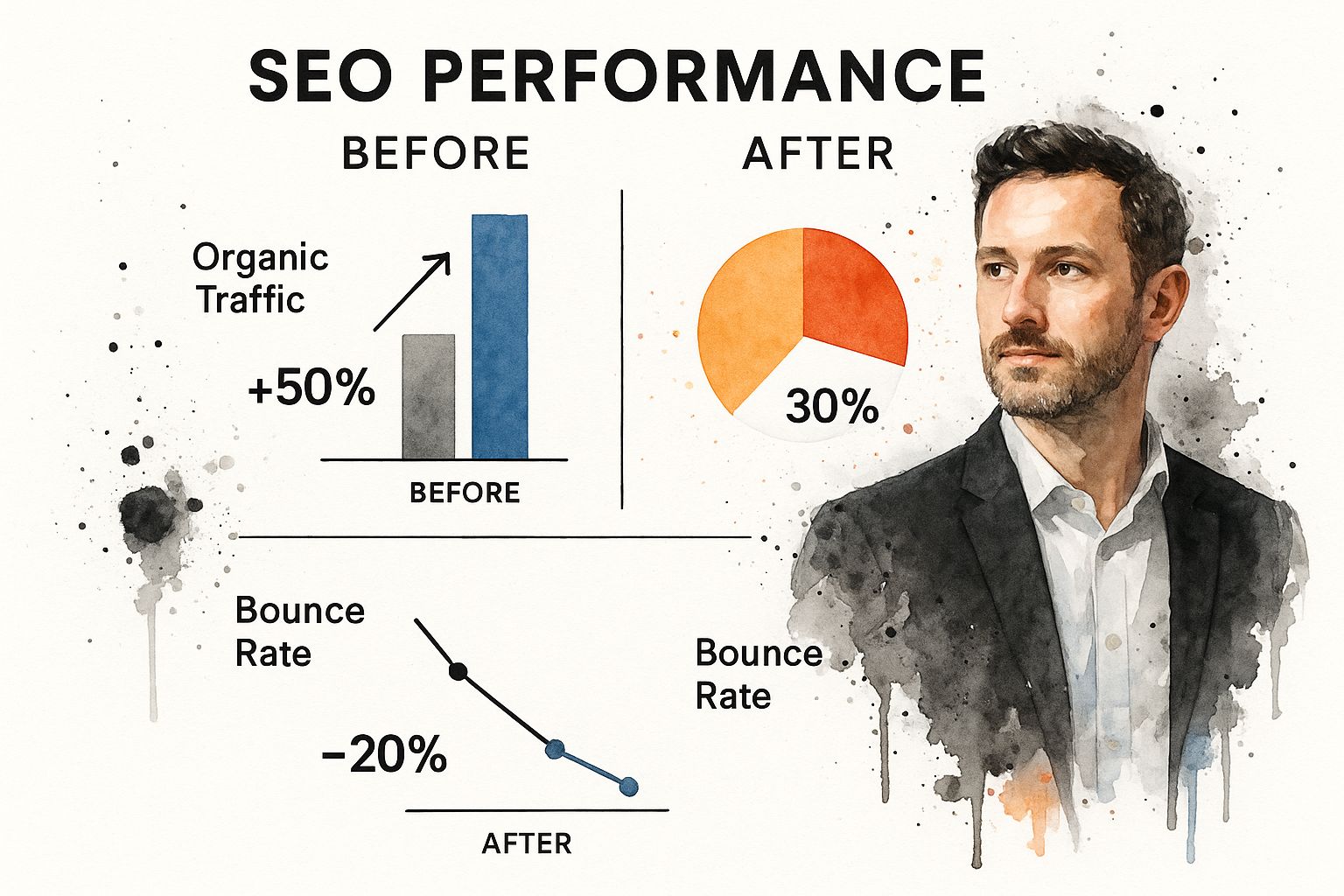
This isn't just about getting more traffic. The data shows that after optimization, you're attracting the right kind of traffic—people far more likely to become a customer.
Online Lead Generation Platform Comparison
Here's a quick breakdown of the top platforms to help you decide which channel aligns best with your business and audience.
| Platform | Best For | Key Targeting Strength | Ideal For Businesses Like |
|---|---|---|---|
| Google Ads | Capturing active, high-intent demand | Keyword and search query targeting | Local services, E-commerce, Urgent-need providers |
| Meta Ads | Building awareness and finding new audiences | Demographics, interests, and life events | Real estate, B2C products, Event promotion |
| LinkedIn Ads | High-quality B2B lead generation | Job titles, industries, and company data | B2B software, Professional services, Recruiters |
Choosing the right platform is about playing to its strengths. Align your channel with your goals, and you'll achieve much better results.
The Powerhouse For B2B Leads
For B2B businesses or professional services, one platform stands head and shoulders above the rest.
LinkedIn is an absolute monster for B2B lead generation. Roughly 40% of B2B marketers cite LinkedIn as their single most effective channel for finding high-quality leads. Its Lead Gen Forms are especially potent, with a 13% average conversion rate—blowing the typical landing page average of 2.35% out of the water.
This is by design. LinkedIn gives you the power to target people by their job title, company size, industry, seniority level, and more. A B2B software company can zero in on Marketing Managers at tech companies with 50-200 employees. It's that precise. Plus, users are on LinkedIn with a professional mindset, making them far more receptive to a business-related offer.
Ultimately, picking your platforms is about matching the channel's unique advantages with your specific business goals and the customer you're trying to reach. When you focus your budget and energy where it counts, you build a much more efficient—and profitable—lead generation machine.
Building Landing Pages That Actually Convert
Getting traffic is a great start, but it's only half the battle. The magic happens when that traffic turns into qualified leads. This is where a high-converting landing page becomes your most powerful tool in the quest for how to get leads online.
A landing page has one job: to convince a visitor to take a single, specific action. This isn't your homepage. There are no distracting navigation links or competing offers. It's a focused, streamlined experience designed purely for one conversion goal.
The Anatomy of a High-Performing Landing Page
To build a page that consistently turns visitors into leads, you need to nail several key elements. Each one plays a psychological role in guiding the user toward your call-to-action.
An effective landing page must have:
- A Compelling Headline: Instantly answer the visitor’s question: "Am I in the right place?" Your headline should be benefit-driven and match the ad they just clicked.
- Benefit-Focused Copy: Don’t just list what your product does. Explain how your offer solves a specific pain point. Use bullet points to make the core benefits scannable.
- Powerful Social Proof: People trust other people more than brands. Including testimonials, case study snippets, or client logos builds instant credibility and reduces hesitation.
- A Clear Call-to-Action (CTA): Use a strong, action-oriented verb on your CTA button. Think "Get My Free Quote" instead of "Submit." Make the button pop with a contrasting color so it’s impossible to miss.
The single biggest mistake we see businesses make is asking for too much information on their lead form. Every extra field creates friction and causes your conversion rate to drop. Stick to the absolute essentials—name and email are often all you need to start the conversation.
Streamlining the Lead Capture Process
Think of your lead form as the final gateway between a curious visitor and a new lead. Your job is to make it as frictionless as possible.
For example, a local service provider offering a free estimate only needs a name, email, and maybe a phone number. Asking for their full address and detailed project specs on the initial form can feel invasive and scare people off.
This is where integrating your advertising with a smart CRM becomes a game-changer. Once a lead is captured, the follow-up process must be instant and seamless. Tools designed for this, like the automated systems in our AdFuel+ package, can trigger texts and emails the moment a lead comes in, ensuring no opportunity is wasted.
Ultimately, a great landing page respects the user’s time. By presenting a clear value proposition, building trust with social proof, and making the sign-up process effortless, you create an experience that doesn't just attract clicks—it creates customers.
Automating Lead Nurturing to Drive Sales
Getting a new lead is just the first step. The real test—and where many businesses drop the ball—is what happens after you have their contact info. This is where hard-won leads slip through the cracks and go cold.
The solution is smart automation. By setting up an intelligent lead nurturing sequence, you can build a relationship and guide prospects toward a sale without managing every interaction manually. This isn't about spamming; it’s about delivering timely, relevant communication that feels personal and adds value.
A solid Customer Relationship Management (CRM) system is the engine that drives this process.
Crafting an Automated Nurturing Sequence
Let's walk through a real-world scenario. A realtor generates a lead from a "First-Time Homebuyer's Guide." What's next? Instead of letting that lead sit, an automated email sequence can turn that initial interest into a real conversation.
Here’s what a simple, effective 5-day sequence might look like:
- Day 1 (Instant): The first email delivers the guide they requested. It's a simple, friendly message that immediately fulfills your promise.
- Day 2: A follow-up email offers related advice, like "3 Common Mortgage Mistakes to Avoid." This provides more value and reinforces your expertise.
- Day 3: You could send a short video testimonial from a happy client. This builds social proof and shows them the results you deliver for people just like them.
- Day 5: The final email in the sequence makes a soft offer, inviting them to book a free, no-obligation consultation to discuss their specific needs.
This gradual approach builds trust by giving value before you ask for anything in return. It educates your prospect and naturally positions you as the go-to expert.
The Rise of AI and Intelligent Follow-Up
This is all becoming even more powerful. The future of lead management is being transformed by artificial intelligence (AI) and automation, pushing us toward strategies that are more data-driven and customer-focused than ever before.
In fact, 69% of high-performing sales teams are already using AI to sharpen their lead generation, enabling real-time analysis and personalized outreach that drives much higher conversion rates. The trend is clear: smarter, automated systems are becoming the standard.
Key Takeaway: A good CRM doesn't just store contacts; it actively helps you convert them. It enables powerful features like lead scoring, which automatically ranks prospects based on their engagement. This lets your sales team focus their valuable time on the hottest, most qualified leads first.
When a lead is finally ready for a real conversation, you can use automated tools to make that connection frictionless. For instance, you can allow them to book a free strategy session directly on your calendar, which cuts out the back-and-forth emails and captures their interest at its peak. This combination of automated nurturing and easy scheduling is a proven formula for turning online interest into real-world sales.
Answering Your Lead Generation Questions
Even with a strong strategy, you'll have questions as you figure out how to get leads online. Getting clear answers to common roadblocks is key to moving forward without wasting your budget. Let's dive into the most frequent questions we get from business owners and marketing managers.
How Much Should I Spend to Get Leads Online?
There is no single magic number. Your budget depends on your industry, goals, and chosen ad platforms. The best place to start is by understanding your numbers: what is a new customer worth to your business, and what can you realistically afford to spend to acquire one?
You don’t need a massive budget to get started on platforms like Google and Meta Ads. Kicking off with a daily budget of $20 to $50 is often enough to start collecting data and seeing which offers resonate.
The most important metric isn't how much you spend; it's your Cost Per Lead (CPL). Become obsessed with this number. The goal is to find channels that deliver high-quality leads at a profitable price, then scale what's working.
Forget arbitrary spending goals. Focus on achieving a return on every dollar. Start small, track everything, and only scale the campaigns that are making you money.
How Long Does It Take to See Results?
How quickly you'll see leads depends on your approach. With the right channels, you can see results surprisingly fast.
- Paid Advertising (Google/Meta): If your paid campaigns are set up correctly, you can start generating leads within a few days. Realistically, it takes a few weeks of testing to dial in your CPL and make it cost-effective.
- Organic Methods (SEO/Content): Building a lead machine through organic search is a marathon, not a sprint. You're typically looking at 3-6 months before you see a steady, predictable flow of inbound leads.
The smartest play is a hybrid one. Use paid ads to get leads in the door right now while you build your long-term organic engine for sustainable, lower-cost leads down the road.
What Are the Most Common Mistakes to Avoid?
In our experience, winning is often about not making the same mistakes as everyone else. These are three pitfalls that sink lead generation efforts time and again:
- No Follow-Up Process: Capturing a lead means nothing if it just sits in a spreadsheet. You must have an automated system that engages new leads the second they express interest. Speed is everything.
- A Generic, One-Size-Fits-All Message: Your ads and landing pages must speak directly to one person—your ideal customer. A vague message that tries to appeal to everyone will resonate with no one.
- Ignoring the Metrics That Matter: Focusing on clicks or impressions is a classic mistake that burns cash. You have to track conversion rates, CPL, and return on investment to know what’s actually moving the needle.
Steer clear of these three devastating errors, and you’ll already be miles ahead of your competition.
Should I Hire an Agency or Do It In-House?
This decision boils down to your team’s available time, budget, and—most importantly—expertise. Managing digital advertising effectively requires a deep, hands-on understanding of analytics, platform algorithms, and conversion strategy.
If your team is already wearing multiple hats or lacks a dedicated digital marketing pro, you could waste months on expensive trial and error. Partnering with a specialized agency can be a shortcut to success, putting proven strategies to work for you from day one. This approach often delivers a much higher return by helping you sidestep common mistakes and making every dollar of your ad budget count.
Ready to stop guessing and start getting a predictable flow of quality leads? The team at Digital Advertising Direct builds and manages high-performance ad campaigns that deliver results. Get a free strategy session today and learn how we can fill your pipeline.